You can open most of it.
The client storefronts are live, though what we can say about their results is up to them. Below those, the six tools we built for our own work — four are public and running right now, so you can judge the standard directly instead of reading our account of it.
Shipped and live.
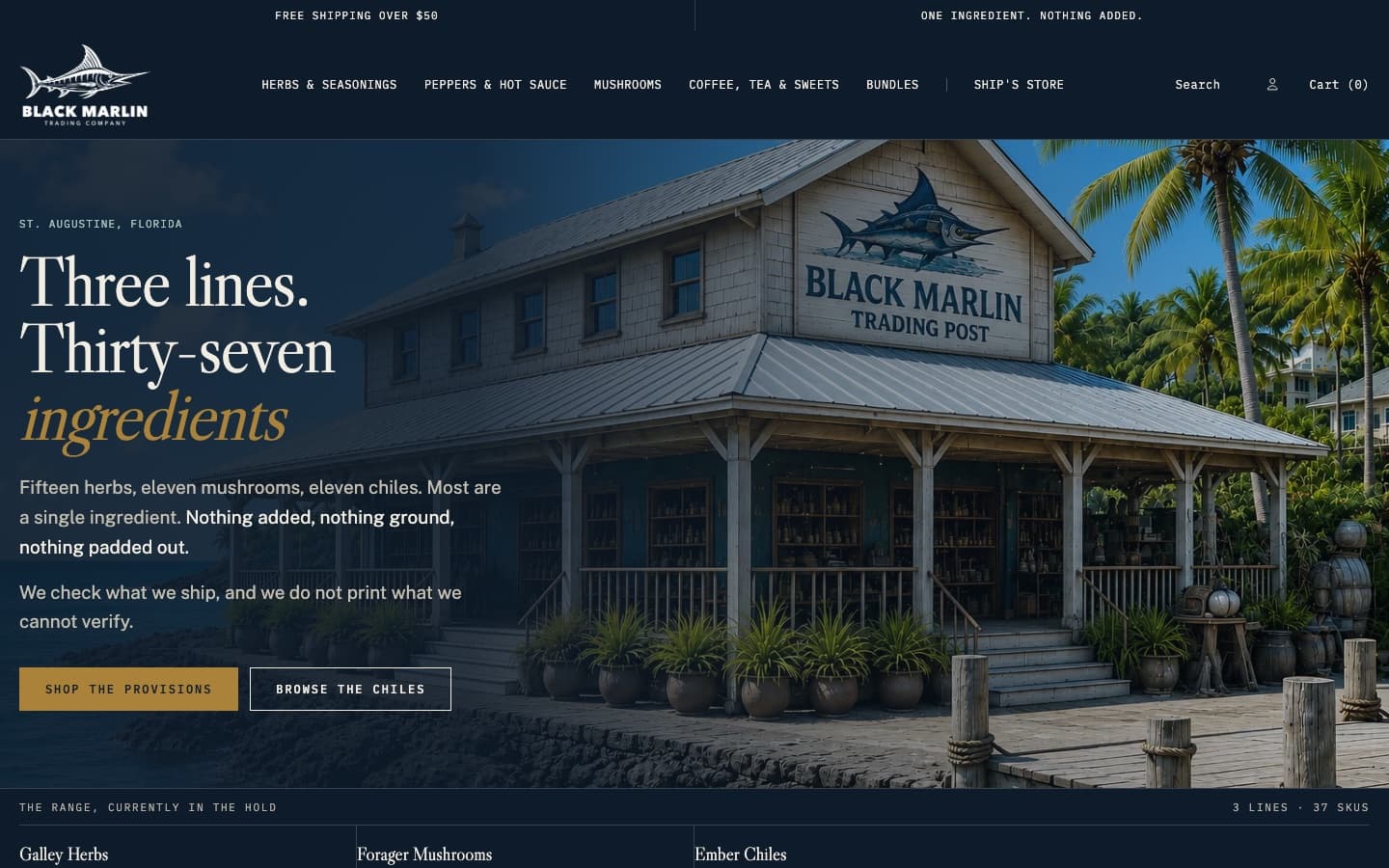
Black Marlin
Built from nothing: the name came from a boat. Identity, packaging and store, across three lines.
Wicked
First US presence for an Australian food brand twenty years old at home. No existing site to build on.
Psychedelic Foods
Freeze-dried herbs, chiles and mushrooms. They had an identity, so the work was the store and the content model under it.
Software we built to do the work faster.
These are for building, not for buying. Four are public and free, so you can open one instead of taking our word for the standard.
Umber
A colour palette tool. Generate, lock what works, and see the colours used as real interface before committing to them.
Kern
A font pairing engine. Around 470 families measured in a real browser for x-height, width and ink density, then scored on those numbers, not on taste.
Nib
A markdown reader you can also edit. Native macOS and web from one codebase, and any VS Code theme repaints the whole application.
Gesso
A surface generator. Six axes of material, from radius through elevation to motion, with the rules that keep them coherent doing most of the work.
Loupe
A design-checking browser. It never reports what it did not measure, which sounds obvious until you find out how often the alternative passes.
Atelier
Our colour and type engines exposed as tools, so generation happens inside constraints instead of being asserted afterwards.
We can go into detail on any of the client work on request. Results and figures belong to the client, so nothing is published here without their sign-off.
Ask about a build